by Lisa Nelson | Nov 27, 2018 | Blog
There are 2.5 billion social media users globally.[1] As a result, companies made social platforms key to their marketing strategy — but who is taking advantage of the mass audience reach for sustainability?
That’s the question we set out to answer in our Susty Social Media Ranking.
We put 100 leading companies under the Context spotlight to reveal how they’re using social media to talk sustainability and who is having the most success. They were ranked based on three success metrics:
1. Frequency of sustainability-related posts
2. Number of influencer followers
3. Amount of engagement generated
The results of the ranking were surprising and insightful. To see the outcome of our ranking please email publications@contextsustainability.com and we’ll send the full report when it’s released on February 1, 2019.
In the meantime, we share some of our main takeaways:
- Facebook, LinkedIn, and Instagram are all frequently used by companies to discuss corporate sustainability, but Twitter is the prevalent platform
- Nearly all companies tweet about sustainability under their main corporate Twitter handle to some extent
- Many companies also have a personal handle of a sustainability leader or a dedicated sustainability handle in addition to a corporate one
- Influencers are most likely to follow a sustainability leader’s handle
How we can help
We can expand your sustainability audience, reaching customers, influencers, and employees with bespoke, bite-sized content on social media. We drive engagement and boost your following with our full-service solution:
- Platform selection and strategy
- Content development and scheduling
- Monitoring and engagement
- Analytics and reporting
[1] https://www.statista.com/statistics/278414/number-of-worldwide-social-network-users/
by Context | Aug 20, 2018 | Blog
No doubt, you’ve heard of the UN Sustainable Development Goals (SDGs), the 17 ambitious targets to end poverty, protect the planet, and usher society into a peaceful and prosperous future. The goals, such as SDG2 “Zero Hunger” and SDG4 “Quality Education” remind us that while we live in a time of abundance, resources and privileges are not evenly distributed across global society.
We’re a resilient species with 7.6 billion members and counting. For humanity to thrive, we must crack the code on fundamental issues like healthcare, education, energy, and infrastructure. The SDGs show us the path forward… the question is, how will we respond?
The Role of Business
The United Nations Development Program (UNDP) stresses the importance of the private sector partnering with other companies, governments, and citizens to advance the SDGs. Undoubtedly, business plays a vital role in advancing the goals. Those that step up to the plate enhance their reputation while strengthening society, on which their business depends.
In 2017, we published a blog about early-adopters, some of which re-structured their corporate sustainability programs to align with the SDGs. For example, beverage company SABMiller developed a new sustainability framework based on the SDGs and reported how specific corporate programs contributed to the goals. And, Unilever’s Sustainable Living Plan marshalled brands to improve global health & hygiene, an approach expressly linked to SDG3, “Good Health and Well Being” and SDG6, “Clean Water and Sanitation”.
It’s About Quality Not Quantity
Next month marks three years since the SGDs were released. Currently, 100[1] of the world’s largest companies reference SDGs in corporate reporting. Many businesses include an SDG index in their annual CSR reports, acknowledging the overlap between on-going programs and the goals. While using the SDGs as an indexing structure ticks a box for corporate communications, it does little to solve the complex problems facing humanity. According to the UN’s 2018 SDG Report, billions of people still lack access to basic sanitation services, electricity, and food. Companies can accelerate progress with deeper, more focused, and meaningful action on the SDGs.
We See You Microsoft
We admire Microsoft’s approach to the SDGs and suggest other companies employ some of these successful strategies. Here’s what’s working for us:
- Microsoft sponsored research to confirm how the IT industry can help. The #SystemTransformation Report affirms the importance of digital solutions, which have up to 23 times higher diffusion speed and reach than traditional approaches.
- The company produced a whitepaper on how its programs advance the SDGs. It features examples like Microsoft Educator which makes educational content, including the “World’s Largest Lesson”, accessible through technology.
- Microsoft’s SDG site and interactive web content use compelling case studies, videos, and impact metrics to inform customers. The company also cross references the SDGs in its annual CSR report.
If your business is making meaningful progress on the SDGs, we encourage you to share your efforts. We can help develop a strong narrative, engaging media, and a multi-channel approach to inspire your target audience.
[1] KPMG. 2018. Analysis of SDG Reporting in Top 250 Global Companies.
by Context | Jul 23, 2018 | Blog
Your sustainability program is firing on all cylinders. You’ve got goals, you’re making progress, and you’re providing value to your business.
After publishing your annual sustainability report you think – we’ve done it, people will finally know what we’ve been up to!
Unfortunately, a one-note communication strategy just isn’t enough. With the breakneck speed of business and the proliferation of digital content, a multi-channel approach is more effective. Think of it this way…
Annual sustainability reports meet the needs of the most dedicated audiences: investors, raters, and rankers. Your website is the place to engage customers and employees with multimedia content. After investing in a report and website, expand your audience by posting daily on social media.
Many social platforms are used for corporate communications including Facebook, Instagram, YouTube, and Twitter. Because they vary in terms of format, audience, and features, each meets a different need. We prefer Twitter for business-to-business (B2B) sustainability communication.
Why Twitter
- The format. Posts begin with text and are enhanced with photos, videos, and links. You can jumpstart your Twitter feed with the content you already have on hand.
- The audience. Twitter boasts millions of global users with participation from businesses, consumers, thought-leaders, and news outlets. While consumer-focused messaging thrives on other platforms, Twitter is a good fit for professional communication.
- The network effect. Smart brands share content that attracts sustainability influencers. When influencers engage with tweets it can build credibility, expand audience, and improve reputation.
- Measurement. Twitter Analytics helps users track performance and optimize content.
How Twitter benefits CR comms
- Audience expansion. Reach global consumers, customers, and employees who don’t read lengthy publications.
- Content utility. Put your CR report text, photos, and videos to work by posting bite-sized pieces on social.
- Freedom of expression. Without the page constraints of a report, your Twitter handle can explore an unlimited number of topics.
- Breathing life into your brand. Authentic, daily communication shows the world your CR program is healthy and engaged.
Making it happen
To make the most of the opportunity, you’ll need to produce meaningful content and post frequently. Here’s the anatomy of a great tweet:
- Keep it short and sweet. Make intelligible commentary with as few characters as possible.
- Add depth. Your readers are savvy media consumers. Go beyond basic marketing-speak to inform and engage.
- Tackle current events. Show your program is attune to the landscape by interacting with industry news, research, and events.
- Garner engagement. Generate likes, retweets, and replies with photos, infographics, videos, and hashtags. Drive traffic to owned and third-party content by linking out.
- Be positive. Help followers see that business is part of the solution by balance the gravitas of sustainability challenges with optimism.
Some brands are already using Twitter to tell their story. Seeking inspiration? Look here: Hewlett Packard Enterprise Living Progress.
by Lisa Nelson | Jun 19, 2018 | Blog
The first sustainability report we wrote was for Unilever in 1997. Over the last 20 years, the content, audience, and mode of reporting has evolved. It’s no longer about lengthy, printed disclosures geared toward regulatory agencies — it’s about short storytelling to a broader audience.
And in this digital age, a broader audience is exactly what we have. Thanks to channels like email, social media, and online news, more and more people get their information from a digital source. But wait, is your report still in PDF format? Don’t fear — here are 3 quick tips for getting that PDF into the digital swing of things.
- Repurpose
The crux of any good communication is making sure it’s tailored to the right audience. PDF reports have their uses. They’re searchable, can be archived, and meet the needs of investors and raters and rankers.
But what about everyone else? Customers and employees don’t want to sift through a 100-page report. You need to meet these audiences where they’re at – and that’s online. Repurpose the core content of your PDF report into bite-sized nuggets for your website.
- Get creative
With an overabundance of stimulation available today, your content needs to stand out. Engage your audience with multi-media formats like videos, infographics, and photos. For example, see how HPE communicates their Living Progress Challenge winner.
- Amplify
If you want to reach customers and employees, put it on social. Eighty-one percent of Americans use some form of social media, and there are an estimated 2.34 billion social media users globally.[1]
Take that repurposed content you made for your website and amplify it on twitter, LinkedIn, and Facebook. Social media gives you the opportunity to engage your audiences more frequently, opposed to the once-a-year engagement common with a sustainability report launch.
Are you interested in growing your sustainability reporting audience through digital channels? If so, reach out to us here, we have experience in developing digital content, managing social media accounts, and more.
[1] https://www.statista.com/statistics/273476/percentage-of-us-population-with-a-social-network-profile/
by Peter Knight | Aug 23, 2017 | Blog
How sustainable are you? This is what everyone wants to know from your sustainability report. Customers, co-workers, shareholders and NGOs seek to understand how your company helps tackle global challenges such as the targets under the Sustainable Development Goals. Yet how many reports are actually read and remembered? By its own reckoning, nearly a third of World Bank reports are never read, and the World Bank spends a quarter of its country services budget on knowledge products! Don’t let your report simply be another PDF documenting water reductions and carbon emissions that is quickly forgotten. Ensure you create a memorable report that builds a closer stakeholder community.
This blog explores how three companies used their annual reports to engage customers and co-workers as well as deliver those important annual stats.
1) Natural Powers
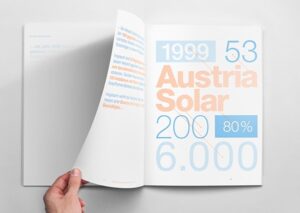
Solar power company Austria Solar illuminated how to make reports engaging back in 2011. The company’s Annual Report looks completely blank until you read it outside in the sun. Perhaps a little inconvenient for cloudy Britain (even in August!) but definitely unforgettable. Plus who doesn’t enjoy an excuse to sit in the park? Yet the reason we love this report is that it reflects what Austria Solar do best – harness the power of the sun.
Sustainability reporting is about showcasing your companies’ progress. Report design can highlight your greatest successes. Taking this example, if your company has achieved admirable gains in renewable energy why not use solar powered graphics to highlight this? Design can be engaging and functional. Full marks, Austria Solar, on producing a report we really want a hard copy of!
Takeaway: Report design is an opportunity to show (not tell) what your company has achieved.
2) Bang on Trend
We saw it in Vogue, temporary tattoos are in. Website hosting company Flywheel got trendy with their 2015 Annual Report. Co-founder Tony Noecker got the company logo tattooed to his forearm to celebrate Flywheel’s success. Taking this inspiration, Flywheel designed six tattoos depicting key 2015 achievements and anecdotes. These (temporary) tattoos structure the report but are also available to customers to order for free. Our favourite is the axe depicting Flywheel’s stance on malware! (For the record, they’re against).
Sustainability communications are about connecting with diverse groups of stakeholders. They can showcase the personable, individual side of your company. Flywheel’s tattoos are not only fun, they enable customers and co-workers to feel involved in the company’s culture and connected to their co-founder. What can you say about your brand through your sustainability report that involves stakeholders? Tattoos are just one option…
Takeaway: Reports should showcase company values and identity to build a closer stakeholder community.
3) Get Graphic
Another web company. Another report. But you won’t feel that way when you click through crowdfunding company Kickstarter’s 2016 Annual Report. The lesson for sustainability reporting is how Kickstarter puts service users at the heart of their report. Eye-catching graphics tell user success stories that are easy to share on social media. A good balance is struck between seriousness and fun – decking out London’s Clapham Common station with cat adverts is clearly a major 2016 breakthrough!
Kickstarter makes users feel proud of their achievements on a personal level. Sustainability strategies often include a focus on enabling customers, co-workers and communities to live healthy, environmentally-friendly lifestyles. Report progress towards these aims that unite your business and stakeholders in a way that makes customers and co-workers feel part of your success. Expand brand recognition by enabling customers to easily share successes online.
Takeaway: Involve stakeholders in successes and enable them to share achievements.
What’s the lesson here? Yes, sustainability reports are a record of progress against company goals. Their job is to report how your company is performing against voluntary sustainability standards and legal requirements. They should be honest, clear and concise. But this functional purpose doesn’t mean they can’t be engaging. With a bit of creative thinking, they are an opportunity to build your brand and strengthen support for your sustainability strategy. Before you craft your next PDF, why not consider if you are making the most of your sustainability report?
Image credits (in order of appearance): Verband Austria Solar Report, Service Plan; 2015 Year in Review, Flywheel; C.A.T.S., Kickstarter.
by Context | Feb 15, 2017 | Blog
If one thing is constant in our modern world, it is that we are constantly changing.
The same can be said for the field of corporate sustainability. It feels like every day there is a new framework, a new ranking, a new concept that promises to change the field. What are the next generation frameworks and ideas that will shape the strategies of corporate sustainability leaders over the next 5 or so years? Looking into our crystal ball, we’ve identified a few – what do you think?
1. Beyond science based GHG targets
One trend gaining traction in the field of corporate sustainability is setting science based targets- GHG reduction targets (those in line with the level of decarbonization required to keep global temperature increase below 2°C compared to preindustrial temperatures, as described in the Fifth Assessment Report of the Intergovernmental Panel on Climate Change (IPCC)). Already this year, a number of companies have set new goals and strategy under the Science Based Targets Initiative (SBT), including Walmart, Tetrapak and Kering. While there is still a long way to go before this concept is commonplace, we’re looking to see what’s next.
- Land and water targets: WRI and Mars Inc. have worked together to develop new science based targets around water and land use. Employing the SBTs GHG methodology, the targets into account the latest science on theglobal carbon budget, water stress and other ecological limits.[1]
- Social impact goals: At the heart of SBTs is a desire to set goals that are based in fact and backed up by research. In the future, we expect to see this rigor applied to companies’ social as well as their environmental goals. As an example – research shows that the most gender diverse companies are 15% more likely to outperform the least gender diverse companies, while the most ethnically diverse companies are 35% more likely to outperform the least ethnically diverse.[2] In the future, will we see companies setting goals based on such research, aiming for the workforce balance that is show by research to correlate to higher performance?
2. Matrixed approach to impacts
In how companies set sustainability strategy and goals, organize their reports or communicate with stakeholders, ESG topics are often presented in silos. In particular, environmental issues are presented in isolation from their related societal impacts. But how companies understand and communicate on these topics is changing – a more complex, matrixed approach is emerging.
For example, the circular economy is most often presented as a framework for reducing use of non-renewable resources, including materials and energy. This model keeps products and materials at their most productive for as long as possible, circling what would have been “waste” back into a circular manufacturing cycle. But, the circular economy isn’t just about reducing resource use, it is about improving social and economic outcomes as well. This new model opens up new service economies in product repair and refurbishment and raises the income potential from waste collection and processing. By some estimates, potential revenues from recycled e-waste in the EU could total more than two billion Euros (2014 estimate).[3] And, of course, with less waste comes less environmental degradation, particularly in those communities that are often the recipients of this waste – such as China which, according to United Nations data, receives about 70% of electronic waste globally.
3. Radical transparency to radical collaboration
Over the last several years, we’ve heard a great deal about radical transparency – the idea that companies, rather than limit their communications to carefully crafted annual or quarterly sustainability publications, would throw open their doors and provide stakeholders with real time updates on the progress and performance of their sustainability programs. As an example, since 2013, H&M has published a full list of its suppliers down to Tier 2 fabric and yarn suppliers. The move was made to demonstrate that H&M has worked hard to develop transparent, strong relationships with suppliers, and the company intends to update the list every three months. This drive toward greater visibility into supply chains and operational performance is leading to new innovations that hold real promise – the new platform, “Trase” (TRAnsparence for Sustainable Economies) aims to bring “radical transparency” to global supply chains, tracking commodities from producers to end purchasers.
Over the next three to five years, we expect this trend toward greater openness and transparency to morph into what we are calling “radical collaboration.” In the quest for faster change, better results, more impact, companies will find new ways to partner with others to solve big challenges. The SDGs are a first step in this direction – providing common goals for multi-sector actors to rally around. Particularly as companies move into parts of the world with lower purchasing power and more constraints, we’ll see big corporations partnering with social entrepreneurs to learn how to do more with less and to innovate for new use cases. These collaborations will be bolder, more strategic and more integrated into the business than ever before, with a high potential for impact
What do you think will be the major trends shaping the future of corporate sustainability? Share with us @Context_Group on Twitter!
[1] http://www.wri.org/blog/2016/10/how-mars-and-wri-developed-science-based-sustainability-targets-climate-land-water
[2] http://www.mckinsey.com/business-functions/organization/our-insights/why-diversity-matters
[3] https://www.elsevier.com/atlas/story/planet/is-there-a-future-for-e-waste-recycling-yes,-and-its-worth-billions